
 EN
EN
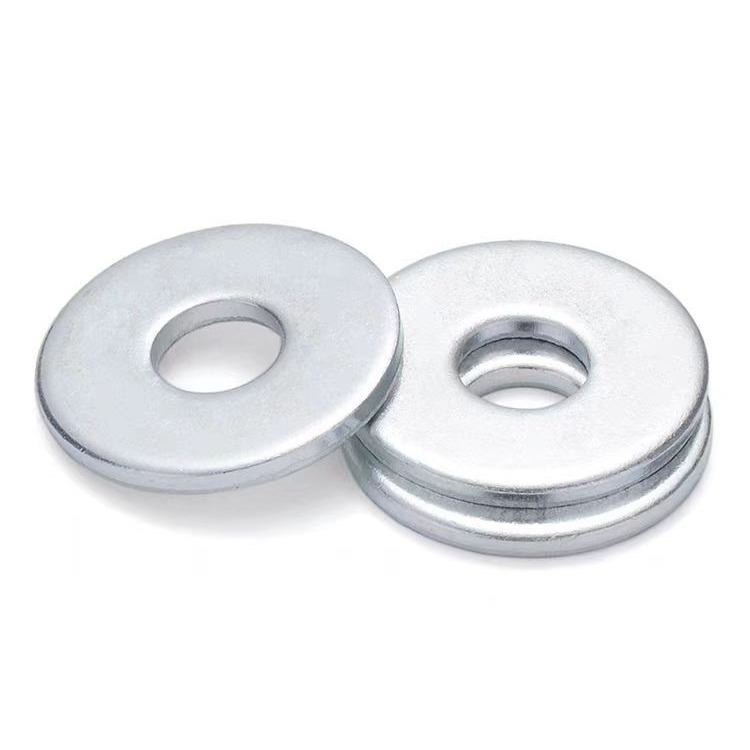
Manufacturing custom stamping parts requires careful consideration of materials and processes to achieve optimal performance, cost-effectiveness, and durability. The selection process involves analyzing the specific requirements of your application, understanding the mechanical properties needed, and evaluating production constraints. Custom stamping parts serve as critical components across industries, from automotive and aerospace to electronics and medical devices, making the material and process selection crucial for project success.
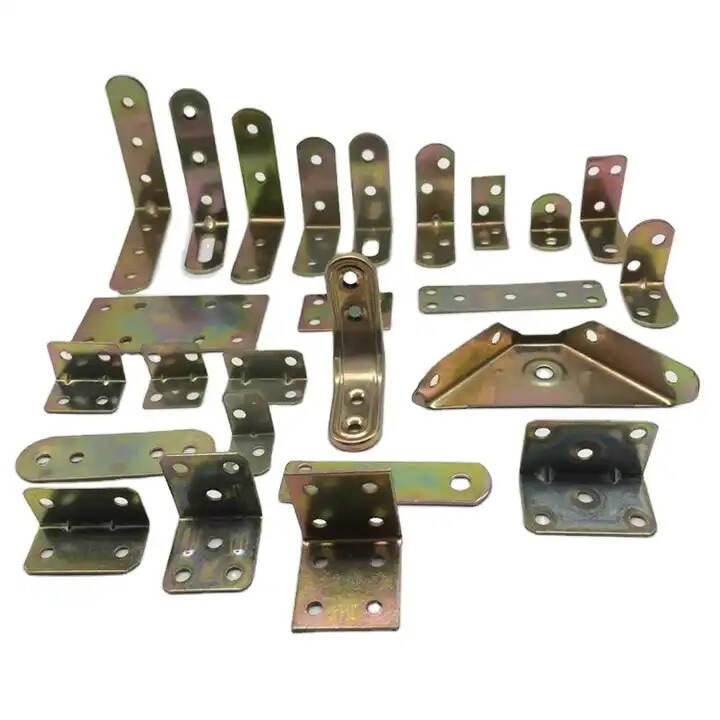
The complexity of modern manufacturing demands a systematic approach to material selection that balances performance requirements with economic considerations. Engineers and procurement professionals must navigate through various material options, each offering distinct advantages and limitations. Understanding these factors enables informed decision-making that directly impacts the final product quality, production efficiency, and overall project profitability. Custom stamping parts manufactured with appropriate materials and processes deliver superior performance while meeting stringent industry standards.
Material Selection Fundamentals for Stamping Applications
Mechanical Property Requirements
The foundation of material selection for custom stamping parts begins with defining the mechanical properties required for your specific application. Tensile strength, yield strength, elongation, and hardness values must align with the operational demands of the finished component. These properties determine how the material will behave under load, resist deformation, and maintain structural integrity throughout its service life. Custom stamping parts operating in high-stress environments require materials with superior mechanical characteristics to prevent premature failure.
Ductility plays a particularly important role in stamping operations, as materials must undergo significant plastic deformation without cracking or fracturing. The formability index, which combines tensile strength and elongation values, provides insight into how well a material will perform during the stamping process. Materials with excellent formability characteristics enable the production of complex geometries while maintaining dimensional accuracy and surface quality in custom stamping parts.
Fatigue resistance becomes critical when custom stamping parts will experience cyclic loading conditions throughout their operational life. The material's ability to withstand repeated stress cycles without developing fatigue cracks directly impacts component reliability and maintenance requirements. Understanding the stress amplitude, frequency, and environmental conditions helps determine the appropriate fatigue strength requirements for the selected material.
Environmental Compatibility Considerations
Environmental factors significantly influence material selection for custom stamping parts, as exposure to corrosive substances, extreme temperatures, or harsh atmospheric conditions can dramatically affect component performance. Corrosion resistance requirements vary based on the operating environment, with marine, chemical, and outdoor applications demanding materials with enhanced protective properties. Stainless steel grades, aluminum alloys, and specialized coatings provide varying levels of corrosion protection for custom stamping parts in challenging environments.
Temperature stability ensures that custom stamping parts maintain their mechanical properties and dimensional accuracy across the expected operating temperature range. High-temperature applications may require materials with elevated creep resistance, while low-temperature environments demand materials that retain ductility and impact resistance. Thermal expansion coefficients must also be considered when custom stamping parts interface with components made from different materials to prevent thermal stress-induced failures.
Chemical compatibility becomes essential when custom stamping parts will contact specific chemicals, solvents, or process fluids during operation. Material degradation through chemical attack can lead to dimensional changes, surface deterioration, or complete component failure. Comprehensive chemical compatibility charts and material testing data help identify suitable materials that will maintain performance when exposed to specific chemical environments.
Common Materials for Custom Stamping Operations
Carbon Steel Variants and Applications
Carbon steel represents one of the most widely used materials for custom stamping parts due to its excellent formability, cost-effectiveness, and broad availability. Low-carbon steels with carbon content below 0.25% offer superior ductility and deep-drawing capabilities, making them ideal for complex geometries requiring significant deformation. These materials stamp easily without work hardening excessively, allowing for intricate part designs with tight tolerances and smooth surface finishes.
Medium-carbon steels provide increased strength and hardness compared to low-carbon variants while maintaining reasonable formability for many stamping applications. These materials work well for custom stamping parts requiring moderate strength levels without the higher costs associated with alloy steels. Heat treatment options allow for property modification after stamping, enabling strength enhancement while maintaining the economic advantages of carbon steel base materials.
High-strength low-alloy steels combine the formability characteristics of carbon steel with enhanced mechanical properties through controlled alloying additions. These materials enable weight reduction in custom stamping parts while maintaining structural performance, making them popular in automotive and transportation applications where weight optimization directly impacts fuel efficiency and performance metrics.
Stainless Steel Grades and Selection Criteria
Austenitic stainless steels, particularly grades 304 and 316, offer excellent corrosion resistance and formability for custom stamping parts in demanding environments. The austenitic microstructure provides superior ductility and work hardening characteristics that facilitate complex forming operations while maintaining dimensional stability. Grade 316 stainless steel includes molybdenum additions that enhance corrosion resistance in marine and chemical processing applications where custom stamping parts face aggressive environmental conditions.
Ferritic stainless steels provide cost-effective corrosion resistance for custom stamping parts in less demanding applications while offering improved formability compared to martensitic grades. These materials contain lower nickel content than austenitic grades, reducing raw material costs while maintaining adequate corrosion protection for many industrial applications. The magnetic properties of ferritic stainless steels may be advantageous or disadvantageous depending on the specific application requirements for custom stamping parts.
Duplex stainless steels combine austenitic and ferritic microstructures to provide enhanced strength and stress corrosion cracking resistance for specialized custom stamping parts applications. These materials offer superior mechanical properties compared to standard austenitic grades while maintaining good formability characteristics. However, the increased strength may require modified stamping parameters and tooling considerations to achieve optimal results in custom stamping parts production.
Process Selection and Optimization Strategies
Progressive Die Stamping Techniques
Progressive die stamping represents the most efficient method for high-volume production of custom stamping parts with consistent quality and dimensional accuracy. This process utilizes a series of sequential operations performed in a single die as the material strip advances through multiple stations. Each station performs specific operations such as piercing, blanking, forming, or coining, gradually transforming the raw material into finished custom stamping parts through precisely controlled deformation steps.
The design of progressive dies requires careful consideration of material flow, springback compensation, and station sequencing to achieve optimal results in custom stamping parts production. Strip layout optimization minimizes material waste while ensuring adequate web strength between parts to maintain strip integrity throughout the progressive operations. Pilot holes and carrier strips guide material positioning and maintain accurate part-to-part spacing for consistent custom stamping parts geometry.
Material strain distribution analysis helps optimize the progressive die design to minimize localized thinning, wrinkling, or cracking during the forming process. Computer simulation software enables virtual testing of different forming sequences and die geometries before physical tooling construction, reducing development time and costs for custom stamping parts production. Progressive stamping typically delivers the lowest per-part costs for high-volume custom stamping parts applications while maintaining excellent dimensional consistency.
Transfer Die and Deep Drawing Methods
Transfer die stamping provides flexibility for producing custom stamping parts with complex three-dimensional geometries that exceed the capabilities of progressive die operations. This process utilizes mechanical or magnetic transfer systems to move workpieces between individual forming stations, allowing for more complex part manipulation and forming operations. Transfer systems enable the production of custom stamping parts with varying orientations, multiple forming directions, and intricate internal features.
Deep drawing operations create custom stamping parts with significant depth-to-diameter ratios through controlled material flow and thinning. The process requires careful control of blank holder pressure, draw ring geometry, and lubrication to prevent wrinkling, tearing, or excessive thinning during the drawing operation. Multiple draw stages may be necessary for custom stamping parts with extreme depth requirements, with intermediate annealing operations to restore material ductility between forming stages.
Blank size calculation and optimization directly impact material utilization and final part quality in deep drawing operations for custom stamping parts. Accurate prediction of material flow patterns helps determine the optimal blank diameter and shape to achieve the desired final geometry while minimizing material waste. Draw ratio limitations for different materials must be considered during the design phase to ensure successful production of custom stamping parts without process-related defects.
Quality Control and Inspection Considerations
Dimensional Accuracy and Tolerance Management
Achieving consistent dimensional accuracy in custom stamping parts requires comprehensive understanding of the factors that influence part geometry throughout the manufacturing process. Springback compensation must be incorporated into die design to account for elastic recovery of the material after forming forces are removed. The magnitude of springback depends on material properties, part geometry, and forming conditions, requiring empirical testing and adjustment to achieve target dimensions in custom stamping parts.
Tool wear patterns directly affect dimensional consistency over extended production runs of custom stamping parts, necessitating regular inspection and maintenance protocols. Cutting edge sharpness, die clearances, and surface finishes change gradually during production, leading to dimensional drift and potential quality issues. Predictive maintenance schedules based on part count, material hardness, and observed wear patterns help maintain dimensional accuracy in custom stamping parts production.
Statistical process control methods enable real-time monitoring of critical dimensions and geometric features in custom stamping parts production. Control charts track dimensional trends and identify process variations before they result in out-of-specification parts. Automated inspection systems using vision technology or coordinate measuring machines provide rapid dimensional verification for high-volume custom stamping parts applications while maintaining comprehensive quality documentation.
Surface Quality and Finish Requirements
Surface quality standards for custom stamping parts vary significantly based on functional requirements, aesthetic considerations, and subsequent manufacturing operations. Forming defects such as orange peel, stretcher strains, or tool marks can affect both appearance and performance characteristics of finished components. Die surface finishes, lubrication systems, and forming speeds must be optimized to achieve the desired surface quality in custom stamping parts without compromising production efficiency.
Edge quality becomes critical for custom stamping parts that will undergo secondary operations such as welding, assembly, or coating applications. Clean, burr-free edges reduce the need for secondary deburring operations while ensuring proper fit and function in assembly applications. Cutting clearances, punch and die sharpness, and material support during the cutting operation directly influence edge quality in custom stamping parts production.
Post-processing requirements may include deburring, surface treatments, or protective coatings to meet final specifications for custom stamping parts. Tumbling, vibratory finishing, or abrasive blasting operations can improve surface uniformity and remove sharp edges that could cause handling or assembly issues. Planning for post-processing requirements during the initial design phase ensures that custom stamping parts meet all functional and aesthetic requirements while maintaining cost-effectiveness.
Cost Optimization and Economic Considerations
Material Cost Analysis and Alternatives
Material costs typically represent 40-60% of the total manufacturing cost for custom stamping parts, making material selection a critical factor in project economics. Raw material prices fluctuate based on commodity markets, availability, and global supply chain conditions, requiring flexible sourcing strategies and alternative material considerations. Value engineering approaches focus on identifying lower-cost materials that meet performance requirements while maintaining quality standards for custom stamping parts applications.
Material utilization optimization through efficient nesting and strip layout design minimizes waste and reduces raw material costs per part. Advanced nesting software algorithms maximize the number of custom stamping parts that can be produced from standard material widths and lengths while considering grain direction requirements and mechanical property optimization. Scrap material recovery and recycling programs further reduce net material costs for custom stamping parts production.
Substitute material evaluation requires comprehensive testing to verify performance equivalency while achieving cost reduction objectives. Alternative suppliers, material grades, or alloy compositions may offer economic advantages without compromising the functional requirements of custom stamping parts. Long-term supply agreements and volume commitments often provide price stability and cost reductions for high-volume custom stamping parts applications.
Production Volume Impact on Process Selection
Production volume significantly influences the optimal manufacturing process selection for custom stamping parts, with different processes providing economic advantages at various volume levels. High-volume applications typically justify the investment in progressive die tooling due to the low per-part production costs and high production rates achievable with automated equipment. The initial tooling investment is amortized over large part quantities, resulting in minimal per-part tooling costs for custom stamping parts.
Medium-volume applications may benefit from compound die operations that combine multiple forming operations in a single press stroke while using simpler tooling than progressive die systems. This approach reduces tooling costs compared to progressive dies while maintaining reasonable per-part costs for custom stamping parts production. Compound dies offer flexibility for design changes and modifications during product development phases.
Low-volume or prototype applications often utilize single-operation dies or soft tooling approaches to minimize initial investment while providing sufficient part quality for testing and evaluation purposes. These methods enable rapid prototype development and design iteration for custom stamping parts without the time and cost commitments associated with production tooling. Soft tooling materials such as kirksite, epoxy, or urethane provide adequate durability for limited production runs while maintaining dimensional accuracy.
Frequently Asked Questions
What factors determine material selection for custom stamping parts
Material selection for custom stamping parts depends primarily on the mechanical property requirements, environmental conditions, formability characteristics, and cost constraints of your specific application. Key considerations include tensile strength, corrosion resistance, temperature stability, and the complexity of the required forming operations. The material must possess adequate ductility to undergo the stamping process without cracking while meeting the performance requirements of the finished component.
How does production volume affect the choice of stamping process
Production volume directly influences process selection economics, with high-volume applications favoring progressive die stamping for lowest per-part costs, medium volumes benefiting from compound die operations, and low volumes utilizing single-operation dies or soft tooling. The fixed costs of tooling development are amortized over the total part quantity, making complex tooling economically viable only when sufficient volume justifies the initial investment for custom stamping parts production.
What quality control measures are essential for stamped components
Essential quality control measures for custom stamping parts include dimensional inspection using coordinate measuring machines or vision systems, surface quality assessment, material property verification, and statistical process control monitoring. Regular tool maintenance, first-article inspection protocols, and in-process monitoring help maintain consistent quality throughout production runs while identifying potential issues before they affect product performance.
How can material costs be optimized without compromising part performance
Material cost optimization for custom stamping parts involves efficient nesting and strip layout design to minimize waste, evaluation of alternative materials that meet performance requirements, and implementation of scrap recovery programs. Value engineering approaches focus on identifying the most cost-effective material grade that satisfies functional requirements while considering long-term supply agreements and volume commitments to achieve price stability and cost reductions.