
 EN
EN
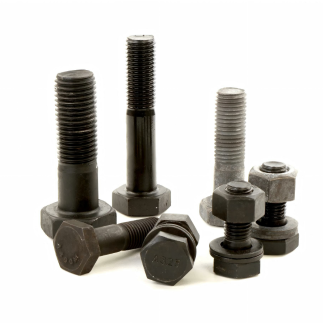
Critical bolts in structural, aerospace, automotive, and industrial applications must withstand extreme forces and environmental conditions throughout their service life. The mechanical properties of these fasteners directly determine whether they will maintain joint integrity under load or fail catastrophically when safety depends on their performance. Understanding why tensile and hardness tests are essential for verifying ASTM or ISO compliance helps engineers make informed decisions about bolt selection, quality assurance protocols, and risk management in critical applications.
The consequences of using bolts that do not meet specified mechanical requirements extend far beyond simple joint failure. Structural collapses, equipment downtime, warranty claims, and regulatory penalties can result when critical fasteners fail to perform as expected. This reality drives the need for comprehensive testing protocols that verify bolt properties against established international standards. Tensile and hardness tests provide quantifiable data about a bolt's ability to resist applied forces and maintain dimensional stability under stress, making them indispensable tools for quality verification in critical applications.
Regulatory Requirements and Standard Compliance
ASTM Standards for Bolt Testing
ASTM International has developed comprehensive standards that define mechanical property requirements for various bolt grades and applications. ASTM A325 and A490 specify minimum tensile strength requirements for structural bolts used in steel construction, while ASTM F1554 covers anchor bolts in concrete applications. These standards establish specific test procedures for determining ultimate tensile strength, yield strength, and elongation properties that bolts must achieve to receive certification. The tensile and hardness tests outlined in these standards provide repeatable methods for verifying that manufactured bolts meet specified performance criteria.
ASTM A370 provides the fundamental test methods and definitions for mechanical testing of steel products, including detailed procedures for conducting tensile tests on fasteners. This standard specifies specimen preparation requirements, testing machine calibration procedures, and data recording protocols that ensure consistent results across different testing facilities. Compliance with ASTM testing procedures requires precise control of testing speed, temperature conditions, and measurement accuracy to generate reliable property data that can be compared against specification requirements.
The economic implications of ASTM compliance extend beyond simple quality assurance. Many construction projects, industrial facilities, and transportation infrastructure systems require certified bolt testing documentation as part of material acceptance procedures. Without proper tensile and hardness test results that demonstrate ASTM compliance, bolts may be rejected during inspection processes, leading to project delays and additional procurement costs.
ISO Standards and International Compliance
ISO 898-1 defines mechanical properties for bolts, screws, and studs made of carbon steel and alloy steel, establishing property classes that correspond to specific tensile strength and hardness ranges. This international standard provides a globally recognized framework for bolt classification that facilitates trade and ensures consistent performance expectations across different markets. The standard requires tensile and hardness tests to verify that bolts meet specified property class requirements before they can carry ISO certification markings.
ISO 6892-1 establishes the methodology for tensile testing of metallic materials at room temperature, providing detailed guidance on specimen preparation, testing procedures, and result interpretation. This standard ensures that tensile and hardness tests conducted by different laboratories worldwide produce comparable results when evaluating bolt mechanical properties. The standardized approach to testing enables manufacturers to demonstrate compliance with international requirements and facilitates acceptance of their products in global markets.
International construction projects often require bolts that meet both local and international standards, making ISO compliance essential for market access. The harmonized testing procedures defined in ISO standards reduce the need for duplicate testing and enable more efficient quality verification processes across multiple regulatory jurisdictions.
Critical Safety and Performance Verification
Load-Bearing Capacity Validation
Tensile testing provides direct measurement of a bolt's ultimate strength and yield point, which are fundamental parameters for determining safe working loads in structural applications. The test results reveal the maximum force that a bolt can withstand before experiencing permanent deformation or complete failure. This information is critical for engineers who must calculate appropriate safety factors and ensure that bolt selections can handle expected service loads with adequate margin for overload conditions.
The relationship between tensile test results and actual field performance depends on understanding how laboratory conditions compare to real-world loading scenarios. Dynamic loading, fatigue cycling, and environmental factors can significantly influence bolt performance compared to static tensile test results. However, tensile and hardness tests provide the baseline mechanical properties that serve as the foundation for more complex analysis of bolt behavior under service conditions.
Hardness testing complements tensile testing by providing rapid assessment of material strength characteristics that correlate with tensile properties. The hardness values obtained through Rockwell or Brinell testing methods can be used to estimate tensile strength using established conversion relationships, enabling quality control personnel to quickly screen bolt lots for compliance with specification requirements before conducting more time-consuming tensile tests.
Material Integrity and Manufacturing Quality
Tensile and hardness tests reveal manufacturing defects and material inconsistencies that could compromise bolt performance in service. Variations in heat treatment, improper alloy composition, or processing errors often manifest as abnormal tensile strength or hardness values that fall outside specification ranges. Early detection of these issues through systematic testing prevents defective bolts from reaching critical applications where failure could have serious consequences.
The microstructural changes that occur during bolt manufacturing processes directly influence mechanical properties measured through tensile and hardness tests. Proper heat treatment produces optimal grain structure and hardness distribution, while inadequate processing can result in soft zones, brittle areas, or inconsistent properties throughout the bolt. Testing results provide objective evidence of manufacturing quality that cannot be assessed through visual inspection alone.
Statistical analysis of tensile and hardness test data from production lots enables manufacturers to monitor process stability and identify trends that could indicate equipment wear, raw material variations, or procedural changes affecting product quality. This data-driven approach to quality control helps prevent systematic problems that could affect large quantities of bolts before issues become apparent through field failures.
Risk Management and Liability Protection
Failure Prevention and Cost Avoidance
The cost of conducting tensile and hardness tests represents a small fraction of the potential expenses associated with bolt failures in critical applications. Structural failures, equipment damage, production interruptions, and emergency repairs can generate costs that are orders of magnitude higher than the investment in comprehensive testing programs. Proactive testing identifies potentially problematic bolts before they are installed, eliminating the risk of field failures and their associated consequences.
Documentation of compliant tensile and hardness test results provides legal protection for engineers, contractors, and facility owners who must demonstrate due diligence in material selection and quality verification processes. Courts and regulatory agencies increasingly expect that critical structural components be supported by appropriate testing documentation that proves compliance with applicable standards. The absence of such documentation can create liability exposure that far exceeds the cost of implementing proper testing procedures.
Insurance companies and project stakeholders often require evidence of material testing and standard compliance as conditions for coverage or project approval. Tensile and hardness tests provide the objective data needed to satisfy these requirements and demonstrate that appropriate quality assurance measures have been implemented to minimize the risk of material-related failures.
Quality Assurance and Reputation Management
Companies that consistently perform tensile and hardness tests on critical bolts build reputations for reliability and quality that provide competitive advantages in demanding markets. Customers who understand the importance of proper testing are more likely to specify suppliers who can demonstrate comprehensive testing capabilities and standard compliance documentation. This market differentiation can justify premium pricing and create long-term customer relationships based on trust and proven performance.
The systematic approach to quality verification enabled by tensile and hardness tests helps organizations develop robust quality management systems that meet ISO 9001 and other recognized standards for process control. These systems provide frameworks for continuous improvement, supplier qualification, and customer satisfaction that extend beyond bolt testing to encompass broader organizational capabilities.
Reputation damage from bolt failures in high-visibility applications can have lasting effects on business relationships and market position. The relatively modest investment in comprehensive testing programs provides insurance against reputation risks that could take years to rebuild after a significant failure event.
Technical Implementation and Testing Protocols
Test Specimen Preparation and Procedures
Proper specimen preparation is essential for obtaining accurate tensile and hardness test results that reflect actual bolt properties. ASTM and ISO standards specify detailed requirements for specimen machining, surface preparation, and dimensional tolerances that must be maintained to ensure test validity. The specimen geometry, gauge length, and gripping arrangements directly influence test results, making adherence to standardized procedures critical for meaningful data generation.
Tensile testing requires careful control of loading rates, temperature conditions, and measurement systems to produce repeatable results. The crosshead speed during testing must be maintained within specified ranges to ensure that strain rates remain consistent with standard requirements. Temperature variations can significantly affect material properties, particularly for bolts that will be used in extreme temperature environments where thermal effects influence mechanical behavior.
Hardness testing procedures must account for bolt geometry, surface conditions, and loading parameters that can influence measured values. The selection of appropriate hardness scales, indenter types, and test loads depends on bolt size, material properties, and specification requirements. Multiple hardness measurements are typically required to characterize property variation across bolt cross-sections and ensure representative results.
Data Interpretation and Acceptance Criteria
The interpretation of tensile and hardness test results requires understanding of the relationship between measured properties and specification requirements. Tensile strength values must be evaluated against minimum requirements while considering the implications of excessive strength that could indicate brittleness or improper heat treatment. The balance between strength and ductility is particularly important for bolts that must accommodate thermal expansion, vibration, or dynamic loading in service.
Statistical analysis of test data helps identify normal property variation versus systematic deviations that could indicate manufacturing problems. Control charts, capability studies, and trend analysis provide tools for monitoring testing programs and ensuring that quality systems remain effective over time. The establishment of appropriate acceptance criteria requires consideration of specification requirements, testing uncertainty, and practical manufacturing capabilities.
Correlation between tensile and hardness test results enables more efficient testing programs that balance thoroughness with cost-effectiveness. Once relationships between these properties are established for specific bolt grades and manufacturing processes, hardness testing can be used for routine quality control while periodic tensile testing verifies continued correlation validity.
FAQ
How often should tensile and hardness tests be performed on critical bolts?
The frequency of tensile and hardness tests depends on bolt criticality, production volume, and applicable standards. Most ASTM and ISO standards require testing of representative samples from each production lot or heat of material. For critical applications, additional testing may be specified by project requirements or quality plans. Continuous production processes typically require testing at regular intervals to verify process stability, while small batch production may require testing of each batch.
Can hardness testing alone verify compliance with ASTM or ISO standards?
While hardness testing provides valuable information about bolt mechanical properties, most ASTM and ISO standards require direct tensile testing to verify compliance with strength requirements. Hardness values can be used to estimate tensile strength using established correlations, but these relationships have inherent uncertainty that may not be acceptable for critical applications. A combination of both hardness and tensile testing provides the most comprehensive verification of bolt properties.
What are the consequences of using bolts that fail tensile or hardness tests?
Using bolts that fail to meet tensile or hardness requirements can result in premature failure, safety hazards, structural collapse, equipment damage, and liability exposure. Beyond immediate safety concerns, the use of non-compliant bolts may void warranties, violate building codes, fail inspection requirements, and create legal liability for designers, contractors, and facility owners. The cost of replacing failed bolts and repairing associated damage typically far exceeds the investment in proper testing.
How do environmental conditions affect the need for tensile and hardness testing?
Bolts used in extreme temperatures, corrosive environments, or high-vibration applications may require additional testing beyond standard room-temperature tensile and hardness tests. Environmental conditions can significantly alter bolt mechanical properties and failure modes compared to laboratory test conditions. Special test procedures may be needed to evaluate performance under service conditions, including elevated temperature testing, corrosion resistance evaluation, and fatigue testing to ensure adequate performance throughout the intended service life.
Table of Contents
- Regulatory Requirements and Standard Compliance
- Critical Safety and Performance Verification
- Risk Management and Liability Protection
- Technical Implementation and Testing Protocols
-
FAQ
- How often should tensile and hardness tests be performed on critical bolts?
- Can hardness testing alone verify compliance with ASTM or ISO standards?
- What are the consequences of using bolts that fail tensile or hardness tests?
- How do environmental conditions affect the need for tensile and hardness testing?