
 EN
EN
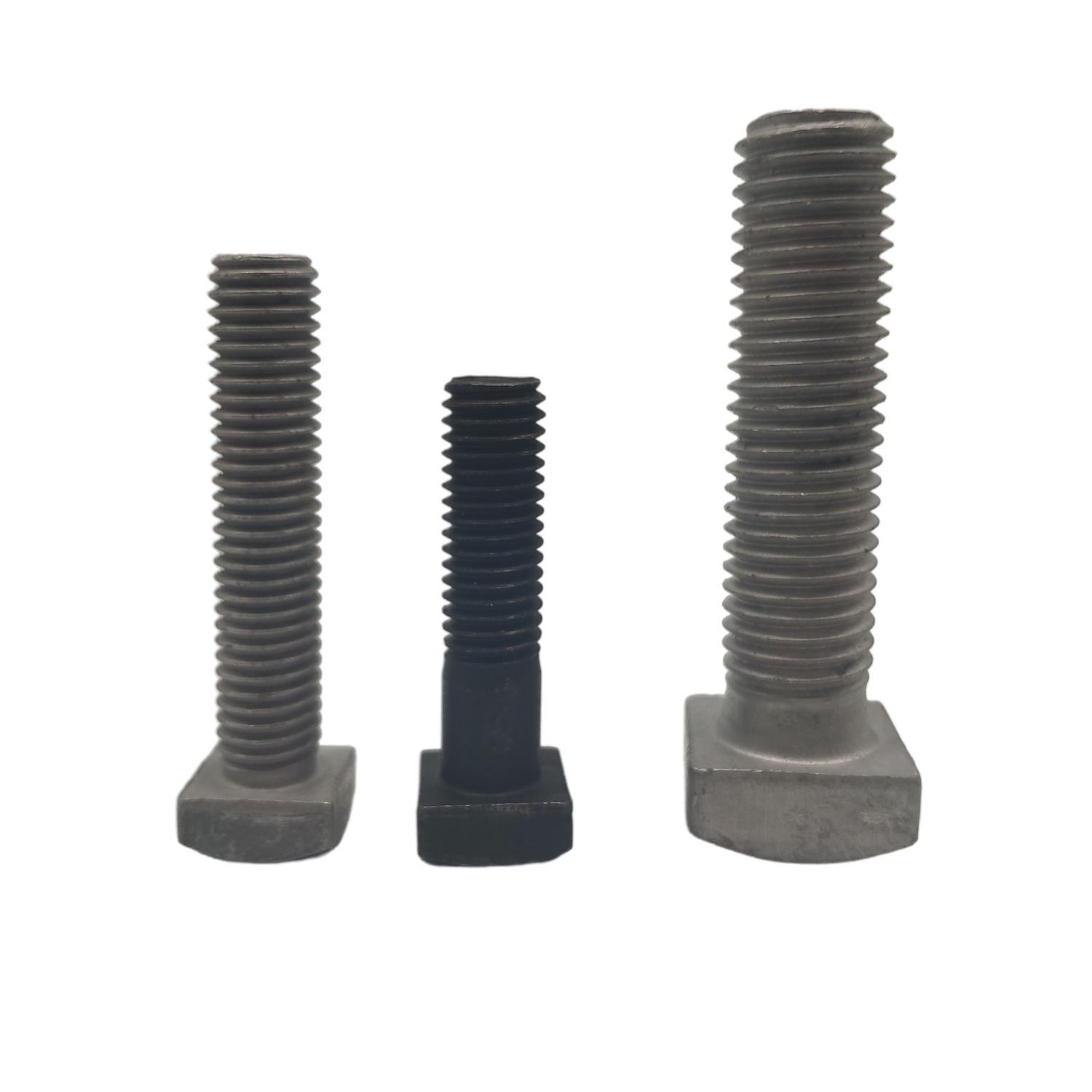
Custom bolts are engineered fasteners manufactured to specific requirements beyond standard commercial offerings, with material grade selection serving as one of the most critical design decisions. The material grade fundamentally determines the bolt's mechanical properties, including tensile strength, yield strength, hardness, and corrosion resistance, making it essential to understand which grades are available for custom bolt applications across different industrial sectors.
Understanding available material grades for custom bolts enables engineers to specify fasteners that meet precise load requirements, environmental conditions, and safety factors. Each material grade classification system provides standardized mechanical properties and chemical compositions, ensuring consistent performance across manufacturing batches while allowing customization of dimensions, thread patterns, head configurations, and special features to meet unique application demands.
Steel Grade Classifications for Custom Bolts
Grade 8.8 Steel Properties and Applications
Grade 8.8 steel represents a medium-strength carbon steel classification commonly specified for custom bolts requiring reliable performance under moderate stress conditions. This grade delivers a minimum tensile strength of 800 MPa and yield strength of 640 MPa, making it suitable for structural applications, machinery assembly, and general engineering uses where consistent mechanical properties are required without excessive cost.
The chemical composition of grade 8.8 steel typically includes controlled carbon content between 0.25% to 0.55%, with manganese, phosphorus, and sulfur additions to achieve desired hardenability and machinability characteristics. Custom bolts manufactured from grade 8.8 steel undergo heat treatment processes including quenching and tempering to develop the specified strength levels while maintaining adequate ductility for reliable service performance.
Manufacturing custom bolts from grade 8.8 steel enables cost-effective solutions for automotive components, construction hardware, industrial machinery, and equipment assembly applications. The grade offers excellent formability during heading operations, consistent thread rolling characteristics, and reliable performance under cyclic loading conditions commonly encountered in mechanical assemblies.
Grade 10.9 High-Strength Steel Characteristics
Grade 10.9 steel provides significantly higher mechanical properties than grade 8.8, with minimum tensile strength of 1040 MPa and yield strength of 940 MPa, making it the preferred choice for custom bolts in high-stress applications. This alloy steel grade incorporates carefully controlled alloying elements including chromium, nickel, molybdenum, or boron to achieve enhanced hardenability and strength characteristics through precise heat treatment processes.
The elevated strength properties of grade 10.9 steel enable custom bolts to carry higher loads in critical applications such as aerospace components, heavy machinery, pressure vessels, and structural connections where safety factors demand superior mechanical performance. The grade maintains good toughness characteristics despite its high strength, providing resistance to brittle failure modes under dynamic loading conditions.
Custom bolts manufactured from grade 10.9 steel require specialized heat treatment procedures including precise temperature control during austenitizing, quenching, and tempering operations. The resulting microstructure delivers consistent mechanical properties throughout the bolt cross-section, ensuring reliable performance under the demanding service conditions that justify specifying this higher-strength material grade.
Grade 12.9 Ultra-High Strength Applications
Grade 12.9 steel represents the highest commonly available strength level for custom bolts, delivering minimum tensile strength of 1220 MPa and yield strength of 1100 MPa through advanced alloy compositions and sophisticated heat treatment processes. This ultra-high strength grade enables custom bolts to achieve maximum load capacity in weight-critical applications where reducing fastener size or quantity provides significant design advantages.
The alloy chemistry of grade 12.9 steel typically includes significant additions of chromium, nickel, molybdenum, and sometimes vanadium to achieve the required hardenability for through-hardening in larger cross-sections. Custom bolts manufactured from this grade undergo carefully controlled heat treatment cycles with precise temperature and time parameters to develop the specified strength levels while avoiding excessive hardness that could compromise ductility.
Applications for grade 12.9 custom bolts include aerospace fasteners, high-performance automotive components, racing applications, and specialized industrial equipment where maximum strength-to-weight ratios are essential. The grade requires careful consideration of hydrogen embrittlement risks during manufacturing and plating processes, often necessitating hydrogen relief treatments and specialized coating systems.
Stainless Steel Grades for Corrosion Resistance
Austenitic Stainless Steel Properties
Austenitic stainless steel grades, primarily 316 and 304 series, provide excellent corrosion resistance for custom bolts operating in challenging environmental conditions including marine atmospheres, chemical processing plants, and food service applications. These grades offer superior resistance to general corrosion, pitting, and crevice corrosion through their chromium and nickel content, with grade 316 providing enhanced molybdenum additions for improved chloride resistance.
The non-magnetic characteristics and excellent formability of austenitic stainless steels enable manufacturing of custom bolts with complex geometries, fine thread pitches, and specialized head configurations. These grades maintain their corrosion resistance properties across wide temperature ranges, making them suitable for both cryogenic applications and elevated temperature service conditions up to approximately 800°C.
Custom bolts manufactured from austenitic stainless steel grades exhibit lower strength levels compared to high-strength carbon steels, typically ranging from 500-700 MPa tensile strength depending on work hardening during forming operations. However, their superior corrosion resistance eliminates the need for protective coatings while providing long-term reliability in aggressive environments where carbon steel fasteners would fail prematurely.
Duplex and Super Duplex Stainless Options
Duplex stainless steel grades combine the beneficial properties of austenitic and ferritic microstructures, delivering higher strength levels than standard austenitic grades while maintaining excellent corrosion resistance for demanding custom bolt applications. These grades typically achieve tensile strengths between 750-900 MPa, enabling reduced fastener sizes compared to austenitic alternatives while providing superior resistance to stress corrosion cracking.
Super duplex stainless steel grades offer even more aggressive corrosion resistance through increased chromium, nickel, and molybdenum contents, making them suitable for custom bolts in offshore oil and gas platforms, desalination plants, and chemical processing equipment. The balanced microstructure provides excellent resistance to chloride-induced corrosion while maintaining good weldability and formability characteristics.
Manufacturing custom bolts from duplex stainless steel grades requires careful attention to thermal processing parameters to maintain the balanced austenite-ferrite microstructure that provides optimal mechanical and corrosion properties. These grades offer excellent fatigue resistance and impact toughness, making them suitable for dynamic loading applications in corrosive environments.
Precipitation Hardening Stainless Grades
Precipitation hardening stainless steel grades such as 17-4 PH and 15-5 PH enable custom bolts to achieve high strength levels comparable to alloy steels while retaining good corrosion resistance characteristics. These grades develop their strength through controlled aging heat treatments that precipitate fine intermetallic compounds within the stainless steel matrix, achieving tensile strengths exceeding 1000 MPa in optimally processed conditions.
The combination of high strength and corrosion resistance makes precipitation hardening stainless steel grades ideal for custom bolts in aerospace applications, medical devices, and precision machinery where both mechanical performance and environmental resistance are required. These grades maintain their properties across moderate temperature ranges and provide excellent dimensional stability during service.
Custom bolts manufactured from precipitation hardening stainless steel grades can be supplied in solution-annealed conditions for ease of machining and forming, then age-hardened after final dimensional processing to develop full strength properties. This processing flexibility enables complex custom bolt geometries while ensuring consistent mechanical properties throughout the finished fastener.
Titanium Alloy Grades and Characteristics
Commercially Pure Titanium Options
Commercially pure titanium grades (CP Ti) provide exceptional corrosion resistance and biocompatibility for custom bolts in specialized applications where these properties justify the premium material cost. Grade 2 titanium offers the best combination of strength, ductility, and corrosion resistance among the commercially pure grades, with minimum tensile strength of 345 MPa and excellent formability for manufacturing complex custom bolt configurations.
The outstanding corrosion resistance of commercially pure titanium stems from its ability to form a protective oxide layer that self-heals when damaged, providing superior performance compared to stainless steel in many aggressive environments including seawater, chlorinated solutions, and oxidizing acids. Custom bolts manufactured from CP titanium maintain their properties indefinitely in these environments without degradation.
Grade 4 commercially pure titanium provides higher strength levels approaching 550 MPa tensile strength while retaining excellent corrosion resistance and biocompatibility characteristics. This grade enables custom bolts for demanding applications in chemical processing, marine hardware, and medical implants where both strength and corrosion resistance are critical performance requirements.
Alpha-Beta Titanium Alloy Properties
Ti-6Al-4V represents the most widely used titanium alloy for custom bolts requiring high strength-to-weight ratios combined with excellent corrosion resistance and temperature capabilities. This alpha-beta alloy achieves tensile strengths exceeding 900 MPa through controlled microstructure development while maintaining the corrosion resistance characteristics that make titanium alloys valuable for aerospace and marine applications.
The aluminum and vanadium additions in Ti-6Al-4V provide solid solution strengthening and enable heat treatment responses that allow custom bolts to be manufactured in various strength conditions. The alloy maintains excellent fatigue resistance under cyclic loading conditions and provides superior performance at elevated temperatures up to approximately 400°C where steel fasteners would experience strength degradation.
Custom bolts manufactured from Ti-6Al-4V alloy offer significant weight savings compared to steel alternatives, making them essential for aerospace applications where reducing structural weight provides fuel efficiency improvements and payload capacity increases. The alloy's excellent corrosion resistance eliminates the need for protective coatings while providing long-term reliability in aggressive service environments.
Beta Titanium Alloy Applications
Beta titanium alloys such as Ti-15V-3Cr-3Sn-3Al provide enhanced strength capabilities and superior cold formability compared to alpha-beta alloys, enabling custom bolts with complex geometries and higher load-carrying capacity. These alloys can achieve tensile strengths exceeding 1200 MPa through appropriate heat treatment while maintaining excellent spring characteristics and corrosion resistance.
The enhanced formability of beta titanium alloys enables manufacturing of custom bolts with fine thread pitches, complex head geometries, and specialized features that would be difficult to produce using conventional titanium alloys. The superior spring properties make these alloys suitable for custom bolts in applications requiring high preload retention and fatigue resistance under dynamic loading conditions.
Custom bolts manufactured from beta titanium alloys provide optimal performance in aerospace fastening applications where maximum strength-to-weight ratios are essential and long-term reliability under demanding service conditions is required. The alloys maintain their mechanical properties across wide temperature ranges while providing excellent corrosion resistance in aggressive environments.
Material Selection Criteria for Custom Applications
Mechanical Property Requirements
Selecting appropriate material grades for custom bolts requires comprehensive evaluation of mechanical property requirements including tensile strength, yield strength, hardness, and fatigue resistance based on specific application loading conditions. The bolt must provide adequate safety factors above maximum expected service loads while maintaining sufficient ductility to prevent brittle failure modes under shock or impact loading conditions.
Proof load testing requirements often drive material grade selection for custom bolts, as the fastener must demonstrate its ability to withstand specified test loads without permanent deformation. Higher strength grades enable custom bolts to meet more demanding proof load requirements while allowing smaller cross-sectional areas that can provide weight savings or packaging advantages in space-constrained applications.
Fatigue life requirements significantly influence material grade selection for custom bolts subjected to cyclic loading conditions. Higher strength grades generally provide improved fatigue resistance, but proper stress concentration control through thread design, surface treatments, and manufacturing quality becomes increasingly critical as strength levels increase.
Environmental Compatibility Factors
Environmental service conditions fundamentally determine appropriate material grade selection for custom bolts, as corrosion resistance requirements often override pure mechanical property considerations. Marine environments typically mandate stainless steel or titanium grades, while high-temperature applications may require specialized alloys that maintain strength and oxidation resistance at elevated service temperatures.
Chemical compatibility becomes critical for custom bolts in processing equipment where exposure to acids, bases, solvents, or reactive chemicals could cause rapid degradation of inappropriate material grades. Galvanic corrosion considerations require careful material selection when custom bolts will be installed in contact with dissimilar metals, potentially necessitating isolation or compatible alloy selection.
Temperature service requirements influence both material grade selection and heat treatment conditions for custom bolts. Cryogenic applications may require impact-tested materials with adequate toughness at low temperatures, while high-temperature service demands alloys that maintain strength and resist creep deformation under sustained loading conditions.
Manufacturing and Cost Considerations
Manufacturing feasibility significantly impacts material grade selection for custom bolts, as some grades require specialized equipment, tooling, or processing capabilities that may not be readily available or cost-effective for particular production volumes. Complex custom geometries may favor more machinable grades even if higher-strength alternatives are theoretically superior for the application.
Material cost considerations often drive selection between alternative grades that meet minimum performance requirements, with premium alloys like titanium justified only when their unique properties provide essential performance benefits. Volume requirements influence the economic feasibility of specialized processing or heat treatment operations needed for higher-grade materials.
Secondary operations such as coating, plating, or surface treatments must be compatible with selected material grades, as some combinations may result in hydrogen embrittlement, coating adhesion problems, or galvanic corrosion issues. Custom bolts requiring special certifications or traceability documentation may favor material grades with established supply chains and qualification procedures.
FAQ
What determines the appropriate strength grade for custom bolts?
The appropriate strength grade for custom bolts is determined by calculating the maximum expected service loads, applying appropriate safety factors, and considering dynamic loading conditions such as vibration or thermal cycling. Engineers typically select grades that provide proof loads at least 25-50% above maximum expected working loads, while ensuring adequate fatigue resistance for cyclic loading applications and sufficient ductility to prevent brittle failure modes.
Can stainless steel custom bolts achieve the same strength as high-grade steel bolts?
Standard austenitic stainless steel custom bolts typically achieve lower strength levels than high-grade carbon steels, with tensile strengths around 500-700 MPa compared to 800-1220 MPa for grades 8.8 through 12.9. However, precipitation hardening stainless grades like 17-4 PH can achieve strengths exceeding 1000 MPa while maintaining corrosion resistance, and duplex stainless grades provide intermediate strength levels with superior environmental resistance compared to carbon steels.
Are titanium custom bolts worth the additional cost?
Titanium custom bolts justify their premium cost in applications where their unique combination of high strength-to-weight ratio, exceptional corrosion resistance, and biocompatibility provides essential performance benefits that cannot be achieved with conventional materials. Aerospace applications, marine environments with severe corrosion exposure, medical devices, and weight-critical applications often realize significant long-term value from titanium despite higher initial material costs.
How do I specify the correct material grade for my custom bolt application?
Specifying the correct material grade requires detailed analysis of mechanical loading requirements, environmental conditions, temperature ranges, chemical exposure, galvanic compatibility with mating materials, and any special certifications or traceability requirements. Consulting with experienced fastener engineers and providing comprehensive application details including load calculations, service environment description, and performance expectations ensures optimal material grade selection for custom bolt applications.