
 EN
EN
Selecting the appropriate fasteners for demanding industrial applications requires careful consideration of multiple factors including environmental conditions, load requirements, and material properties. When working with critical structural connections, the choice between different grades and materials can significantly impact the longevity and safety of your project. Understanding the specific characteristics of each fastener type, particularly when dealing with heavy-duty applications, ensures optimal performance and compliance with industry standards.
Understanding Material Grade Classifications
Steel Grade Standards and Properties
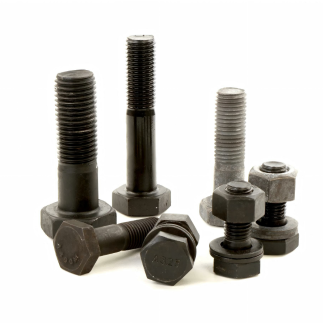
Steel fasteners are classified according to specific grade systems that indicate their tensile strength, yield strength, and overall mechanical properties. The most commonly used classification system in North America follows ASTM standards, where grades like A325 and A490 represent different strength levels for structural applications. These grades determine the maximum stress a heavy hex structural bolt can withstand before failure, making proper selection crucial for safety-critical applications. Higher grade numbers typically indicate superior strength characteristics but may come with increased material costs and specific installation requirements.
Grade A325 fasteners offer excellent strength-to-cost ratios for most structural steel connections, featuring minimum tensile strengths ranging from 120 to 150 ksi depending on bolt diameter. These fasteners provide reliable performance in standard construction applications where moderate to high loads are expected. The material composition typically includes medium carbon steel with specific alloying elements to achieve the required mechanical properties while maintaining good weldability and machinability characteristics.
High-Strength Alloy Considerations
Grade A490 fasteners represent the premium tier of structural fasteners, offering superior strength characteristics for the most demanding applications. These high-strength alloy steel fasteners feature minimum tensile strengths of 150 to 170 ksi, making them ideal for critical connections where maximum load capacity is essential. The enhanced properties of A490 grade materials enable engineers to specify smaller diameter fasteners for equivalent load capacities, potentially reducing overall connection weight and complexity.
The alloy composition of high-strength fasteners includes carefully controlled amounts of chromium, molybdenum, and other elements that enhance hardenability and strength retention at elevated temperatures. When specifying a heavy hex structural bolt in A490 grade, engineers must consider the increased installation torque requirements and potential for hydrogen embrittlement in certain environments. Proper storage, handling, and installation procedures become even more critical with these premium fasteners to ensure optimal performance throughout their service life.
Environmental Factor Assessment
Corrosion Resistance Requirements
Environmental conditions play a decisive role in material selection for structural fasteners, particularly when exposure to moisture, chemicals, or atmospheric pollutants is expected. Standard carbon steel fasteners may experience rapid degradation in corrosive environments, leading to reduced load capacity and potential structural failures. Hot-dip galvanizing provides excellent corrosion protection for most outdoor applications, creating a metallurgically bonded zinc coating that sacrificially protects the underlying steel substrate.
For marine environments or chemical processing facilities, stainless steel fasteners offer superior corrosion resistance despite higher initial costs. Austenitic stainless grades like 316 provide excellent resistance to chloride-induced corrosion, making them suitable for coastal installations and offshore structures. When selecting corrosion-resistant materials for heavy hex structural bolt applications, engineers must balance the enhanced durability against potential galvanic corrosion issues when dissimilar metals are used in the same connection.
Temperature Extremes and Thermal Cycling
Temperature variations significantly affect fastener performance, particularly in applications subject to thermal cycling or extreme temperature exposure. Low-temperature environments can cause brittle fracture in certain steel grades, while high-temperature exposure may lead to stress relaxation and reduced clamping force over time. Fastener materials must maintain adequate toughness and strength characteristics across the expected temperature range to ensure reliable long-term performance.
Special consideration must be given to coefficient of thermal expansion differences between fastener materials and the connected components. Significant expansion mismatches can generate additional stresses during temperature changes, potentially leading to fatigue failures or connection loosening. Impact testing at expected service temperatures helps verify that the selected heavy hex structural bolt grade maintains adequate toughness characteristics throughout the anticipated operating range.
Load Analysis and Strength Requirements
Static Load Calculations
Proper load analysis forms the foundation of appropriate fastener selection, requiring detailed evaluation of all forces acting on the connection throughout its service life. Static loads include dead loads from the structure's self-weight, live loads from occupancy or equipment, and environmental loads such as wind or seismic forces. These loads must be accurately calculated and factored according to applicable building codes to determine the required fastener capacity and quantity.
The relationship between applied loads and fastener stress involves complex considerations including load distribution among multiple fasteners, eccentricity effects, and stress concentrations at bolt holes. When sizing a heavy hex structural bolt for static applications, engineers typically apply appropriate safety factors to account for load uncertainties and material property variations. The selected fastener grade must provide adequate strength margin above the calculated maximum working stress to ensure reliable performance under all anticipated loading conditions.
Dynamic and Fatigue Considerations
Dynamic loading conditions require special attention to fatigue resistance characteristics, as repeated stress cycles can lead to crack initiation and propagation even at stress levels well below the material's ultimate strength. Fasteners subjected to vibration, traffic loads, or machinery-induced forces must be evaluated for their fatigue life under the expected stress range and cycle count. Higher strength grades do not automatically provide better fatigue resistance, making careful analysis essential for dynamic applications.
Preload magnitude significantly affects fatigue performance, with properly tensioned fasteners generally exhibiting superior fatigue resistance compared to loose connections. The clamping force generated by a properly installed heavy hex structural bolt helps maintain joint integrity and reduces stress amplitude in the fastener threads. Regular inspection and maintenance programs become particularly important for dynamically loaded connections to detect any loosening or degradation before critical failures occur.
Installation and Quality Control Factors
Torque and Tensioning Requirements
Proper installation procedures are critical for achieving the designed performance from any structural fastener system, regardless of the selected grade or material. Different fastener grades require specific installation torques or tensions to develop the required clamping force while avoiding over-stressing the fastener material. Installation specifications must account for thread lubrication, surface conditions, and tooling capabilities to ensure consistent and reliable results across all connections in a project.
Turn-of-nut and direct tension indicator methods provide alternative approaches to achieving proper preload in structural connections, each with specific advantages and limitations. The selected installation method must be compatible with the chosen heavy hex structural bolt grade and the project's quality control requirements. Proper installation training and calibrated tooling are essential for achieving consistent results and avoiding costly rework or potential safety issues.
Quality Assurance and Testing Protocols
Comprehensive quality assurance programs ensure that fasteners meet specified requirements and perform reliably throughout their service life. Material certifications, dimensional inspections, and mechanical property testing provide verification that supplied fasteners conform to the specified grade and quality standards. Lot traceability becomes particularly important for critical applications where fastener failure could have serious consequences.
Field inspection procedures must verify proper installation techniques and achieved preload levels, particularly for connections using high-strength fasteners. Non-destructive testing methods can detect installation defects or material flaws that might compromise long-term performance. Documentation of all quality control activities provides valuable records for future maintenance planning and helps identify any systematic issues that might affect multiple connections within a project.
Cost-Benefit Analysis and Selection Criteria
Initial Cost Versus Lifecycle Value
While higher grade fasteners typically command premium prices, the total cost of ownership often favors quality materials in demanding applications. Factors such as reduced maintenance requirements, extended service life, and improved reliability can offset higher initial material costs over the project lifecycle. The cost analysis should include potential consequences of fastener failure, including repair costs, downtime expenses, and safety implications.
Standardization on specific fastener grades and materials can provide cost advantages through bulk purchasing and reduced inventory complexity. However, over-specifying fastener grades for applications that don't require premium performance represents unnecessary expense that should be avoided through proper engineering analysis. The selected heavy hex structural bolt grade should provide appropriate performance margins without excessive over-design that increases project costs without commensurate benefits.
Availability and Supply Chain Considerations
Material availability and delivery schedules can significantly impact project timelines, particularly for specialized grades or non-standard sizes. Standard grades like A325 are typically readily available from multiple suppliers, while premium grades or special materials may require longer lead times and limited supplier options. Early material procurement planning helps avoid project delays and ensures adequate quality control time for critical fasteners.
Geographic location and local supplier capabilities influence material selection decisions, as shipping costs and delivery reliability vary significantly between different fastener types and suppliers. Establishing relationships with qualified suppliers who understand the technical requirements and quality standards for structural fasteners helps ensure consistent material quality and reliable delivery performance. Backup supplier arrangements provide additional security for critical projects where fastener delays could have serious consequences.
FAQ
What is the difference between A325 and A490 grade structural bolts?
A325 and A490 represent different strength grades for structural fasteners, with A490 offering superior tensile and yield strength characteristics. A325 bolts are made from medium carbon steel and provide tensile strengths of 120-150 ksi, suitable for most general structural applications. A490 bolts are manufactured from alloy steel with tensile strengths of 150-170 ksi, making them ideal for high-load applications where maximum strength is required. The higher strength of A490 fasteners enables the use of smaller diameter bolts for equivalent load capacity.
How does environmental exposure affect fastener material selection?
Environmental conditions significantly influence material choice for structural fasteners, particularly regarding corrosion resistance requirements. Outdoor applications typically require hot-dip galvanized coatings or stainless steel materials to prevent corrosion-induced degradation. Marine environments or chemical exposure conditions may necessitate specialized stainless steel grades like 316 for optimal performance. Temperature extremes also affect material selection, as some grades may become brittle at low temperatures or experience strength reduction at elevated temperatures.
What installation considerations apply to high-strength structural bolts?
High-strength structural bolts require specific installation procedures to achieve proper preload and optimal performance. Installation methods include torque control, turn-of-nut, or direct tension indicators, each requiring proper technique and calibrated equipment. Higher grade fasteners typically require increased installation torques and may be more sensitive to over-tensioning. Proper surface preparation, thread lubrication, and installer training are essential for achieving consistent results and avoiding installation-related failures.
How do I determine the appropriate safety factor for critical connections?
Safety factors for structural connections depend on load uncertainty, failure consequences, and applicable building codes or design standards. Typical safety factors range from 2.0 to 4.0 for ultimate strength calculations, with higher factors applied to critical connections where failure could have catastrophic consequences. The analysis must consider all potential loading conditions including dynamic effects, environmental factors, and material property variations. Professional engineering judgment and adherence to recognized design standards ensure appropriate safety margins for each specific application.