
 EN
EN
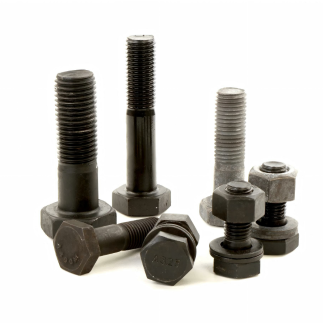
The reliability and safety of heavy machinery depend fundamentally on the structural integrity of their fastening systems. In industrial applications where equipment operates under extreme loads, vibrations, and environmental stresses, the importance of using premium-quality fasteners cannot be overstated. High-strength nuts and bolts serve as the backbone of mechanical assemblies, ensuring that critical components remain securely connected throughout their operational lifespan. These specialized fasteners are engineered to withstand forces that would cause standard hardware to fail, making them indispensable for applications ranging from construction equipment and mining machinery to offshore drilling rigs and power generation systems. The selection and proper installation of high-strength nuts and bolts directly impacts equipment performance, operational safety, and long-term maintenance costs.
Material Properties and Specifications
Steel Grade Classifications for Heavy-Duty Applications
The foundation of superior fastener performance lies in the careful selection of steel grades and their corresponding mechanical properties. High-strength nuts and bolts are manufactured using advanced steel alloys that undergo specific heat treatment processes to achieve optimal tensile strength, yield strength, and hardness characteristics. Common specifications include ASTM A325, A490, and A449 for structural applications, each designed to meet stringent requirements for proof load, ultimate tensile strength, and elongation properties. These specifications ensure that fasteners can handle substantial mechanical loads while maintaining dimensional stability under stress.
The carbon content and alloying elements in these specialized steels contribute significantly to their mechanical properties. Medium carbon steels with chromium, molybdenum, and nickel additions provide enhanced hardenability and toughness, enabling the production of fasteners with tensile strengths exceeding 150,000 PSI. Heat treatment processes including quenching and tempering are carefully controlled to achieve the desired microstructure, balancing strength with ductility to prevent brittle failure under dynamic loading conditions.
Surface Treatment and Coating Technologies
Advanced surface treatments play a crucial role in extending the service life of high-strength nuts and bolts in challenging industrial environments. Hot-dip galvanizing provides excellent corrosion resistance by forming a protective zinc coating that sacrificially protects the underlying steel substrate. This treatment is particularly valuable for outdoor applications and environments with high humidity or chemical exposure. Alternative coating systems include zinc-nickel plating, organic coatings, and specialized anti-seize compounds that facilitate installation and future maintenance.
The selection of appropriate surface treatments must consider the specific environmental conditions and compatibility with mating materials. In marine environments, super-duplex stainless steel fasteners or those with specialized marine-grade coatings provide superior resistance to saltwater corrosion. For high-temperature applications, oxidation-resistant coatings and specialized lubricants ensure reliable performance while preventing galling and seizing during thermal cycling.
Load Distribution and Stress Management
Understanding Preload Forces and Clamping Mechanisms
Proper preload application is fundamental to achieving optimal performance from high-strength nuts and bolts in structural applications. The preload force creates clamping pressure that maintains joint integrity under external loading conditions, preventing separation and relative movement between connected components. This clamping force must be carefully calculated based on the joint configuration, external loads, and safety factors required for the specific application. Insufficient preload can lead to joint loosening, while excessive preload may cause fastener failure or damage to connected materials.
The relationship between torque application and achieved preload is influenced by numerous factors including thread pitch, coefficient of friction, and surface conditions. Advanced torque-tension relationships are established through empirical testing and theoretical calculations to ensure consistent preload application during assembly. Controlled tightening procedures, including the use of calibrated torque wrenches and tension-indicating washers, help achieve the desired preload while avoiding over-tightening that could compromise fastener integrity.
Dynamic Loading and Fatigue Resistance
Heavy machinery operates under complex loading conditions that include static loads, dynamic forces, and cyclic stresses that can lead to fatigue failure over time. High-strength nuts and bolts must be designed to withstand these varying load conditions while maintaining their structural integrity throughout the equipment's operational life. Fatigue resistance is enhanced through careful attention to thread root radius, surface finish quality, and stress concentration minimization in the fastener design.
The endurance limit of high-strength fasteners is particularly important in applications involving repetitive loading cycles such as reciprocating machinery, rotating equipment, and structures subject to wind or seismic loading. Advanced fatigue testing protocols simulate real-world loading conditions to validate fastener performance and establish safe operating parameters. Thread rolling processes, which cold-form threads rather than cutting them, improve fatigue resistance by creating compressive residual stresses in critical areas and eliminating sharp stress concentrations inherent in machined threads.
Installation and Assembly Techniques
Proper Tightening Procedures and Torque Specifications
Achieving optimal performance from high-strength nuts and bolts requires adherence to established installation procedures that ensure proper preload development without exceeding material limits. Torque specifications are developed based on the fastener grade, thread pitch, surface conditions, and lubrication factors. These specifications typically include initial torque values followed by verification steps to confirm proper installation. Multi-stage tightening procedures may be required for critical applications where precise preload control is essential.
The installation sequence becomes particularly important in multi-bolt joints where uneven tightening can create stress concentrations and reduce overall joint performance. Star or cross patterns are commonly employed to ensure uniform load distribution across the joint interface. Real-time torque monitoring systems and digital torque wrenches provide enhanced control and documentation capabilities, ensuring consistent installation quality and traceability for critical applications.
Quality Control and Inspection Methods
Comprehensive quality control measures are essential to ensure that high-strength nuts and bolts meet specified requirements and perform reliably in service. Visual inspection procedures identify surface defects, dimensional irregularities, and coating quality issues that could compromise performance. Dimensional verification using precision measuring equipment confirms thread accuracy, head geometry, and overall length specifications. Hardness testing validates heat treatment effectiveness and ensures consistent mechanical properties throughout production lots.
Advanced non-destructive testing methods including magnetic particle inspection and ultrasonic testing can detect internal defects such as inclusions, cracks, or heat treatment irregularities that might not be visible through conventional inspection methods. Documentation and traceability systems track material certifications, test results, and installation records to support quality assurance programs and facilitate troubleshooting if performance issues arise during service.
Applications in Heavy Machinery
Construction and Earthmoving Equipment
Construction and earthmoving equipment represent some of the most demanding applications for high-strength nuts and bolts, where fasteners must withstand extreme shock loads, vibration, and environmental exposure. Excavators, bulldozers, and wheel loaders rely on these critical components to maintain structural connections in tracks, booms, buckets, and hydraulic systems. The dynamic nature of construction operations creates complex loading patterns that require fasteners with exceptional fatigue resistance and durability.
Track systems in particular demand high-strength nuts and bolts capable of handling the combination of tensile, compressive, and shear forces generated during operation over rough terrain. The fasteners must maintain preload integrity despite continuous vibration and shock loading while resisting loosening that could lead to catastrophic failure. Special attention is given to thread locking compounds and mechanical locking devices that provide additional security against loosening in these challenging applications.
Mining and Processing Equipment
Mining operations present unique challenges for fastener selection due to the combination of heavy loads, corrosive environments, and continuous operation requirements. High-strength nuts and bolts in mining equipment must maintain reliability in applications ranging from conveyor systems and crushing equipment to extraction machinery and processing plants. The harsh conditions often include exposure to abrasive materials, chemicals, and extreme temperatures that can accelerate wear and corrosion.
The critical nature of mining operations demands fasteners with proven reliability and extended service life to minimize unplanned maintenance and production interruptions. Specialized alloys and surface treatments are often required to address specific environmental challenges such as acid mine drainage or exposure to sulfur compounds. Regular inspection and maintenance protocols ensure that high-strength nuts and bolts continue to perform reliably throughout their service life.
Maintenance and Lifecycle Management
Inspection Schedules and Performance Monitoring
Effective maintenance programs for high-strength nuts and bolts include regular inspection schedules designed to identify potential issues before they lead to failures. Visual inspections focus on detecting signs of loosening, corrosion, mechanical damage, or excessive wear that could compromise fastener integrity. Torque verification procedures confirm that preload levels remain within acceptable ranges, while dimensional measurements can identify progressive elongation or other signs of fatigue damage.
Advanced monitoring techniques including ultrasonic bolt load measurement and strain gauge systems provide real-time data on fastener condition and loading patterns. These technologies enable predictive maintenance strategies that optimize replacement intervals while ensuring safety and reliability. Documentation systems track inspection results, maintenance activities, and performance trends to support data-driven decision making and continuous improvement initiatives.
Replacement Criteria and Upgrade Considerations
Establishing clear replacement criteria for high-strength nuts and bolts helps maintain equipment safety and performance while optimizing maintenance costs. Factors influencing replacement decisions include dimensional changes, surface condition, torque retention capability, and service history. Fasteners showing signs of thread damage, excessive corrosion, or permanent deformation should be replaced immediately to prevent potential failures.
Technology advances in materials science and manufacturing processes provide opportunities for upgrading to improved fastener designs that offer enhanced performance characteristics. Newer alloy systems may provide superior corrosion resistance or fatigue life, while advanced surface treatments can extend service intervals. Cost-benefit analysis considers the initial investment in premium fasteners against the potential savings in maintenance costs and downtime reduction.
FAQ
What makes high-strength nuts and bolts different from standard fasteners?
High-strength nuts and bolts are manufactured using premium steel alloys with enhanced mechanical properties including higher tensile strength, improved fatigue resistance, and superior toughness. They undergo specialized heat treatment processes and quality control measures that ensure consistent performance under demanding loading conditions. These fasteners typically meet stringent industry specifications such as ASTM A325 or A490, which require proof load capabilities significantly higher than standard commercial fasteners.
How do you determine the proper torque specifications for critical applications?
Torque specifications for high-strength nuts and bolts are determined through a combination of theoretical calculations and empirical testing that considers the fastener grade, thread characteristics, surface conditions, and required preload. Engineering calculations account for the relationship between applied torque and achieved tension, while test data validates these relationships under actual installation conditions. Factors such as lubrication, surface roughness, and temperature must be considered to ensure accurate torque-tension relationships.
What are the most common causes of fastener failure in heavy machinery?
The most common causes of fastener failure in heavy machinery include insufficient preload leading to loosening and fatigue, overloading beyond the fastener's capacity, corrosion damage compromising cross-sectional area, and improper installation procedures. Environmental factors such as temperature cycling, chemical exposure, and vibration can accelerate these failure mechanisms. Proper selection, installation, and maintenance practices significantly reduce the likelihood of premature fastener failure.
How often should high-strength fasteners be inspected in critical applications?
Inspection frequency for high-strength nuts and bolts depends on the specific application, operating conditions, and criticality of the joint. Heavy machinery applications typically require initial inspections after a brief run-in period, followed by regular intervals based on operating hours or calendar time. Critical structural connections may require monthly or quarterly inspections, while less critical applications might be inspected annually. High-vibration or corrosive environments may necessitate more frequent inspection schedules to ensure continued reliability and safety.
Table of Contents
- Material Properties and Specifications
- Load Distribution and Stress Management
- Installation and Assembly Techniques
- Applications in Heavy Machinery
- Maintenance and Lifecycle Management
-
FAQ
- What makes high-strength nuts and bolts different from standard fasteners?
- How do you determine the proper torque specifications for critical applications?
- What are the most common causes of fastener failure in heavy machinery?
- How often should high-strength fasteners be inspected in critical applications?