
 EN
EN
Manufacturing industries across the globe are constantly seeking cost-effective solutions that maintain high quality and precision. One question that frequently arises in production planning is whether custom stamping parts can effectively replace more expensive machined components while maintaining the same level of accuracy and performance. The answer lies in understanding the capabilities, limitations, and technological advancements in modern stamping processes. As manufacturers face increasing pressure to optimize costs without compromising quality, the potential of custom stamping parts to deliver tight tolerances has become a critical consideration for engineers and procurement specialists alike.
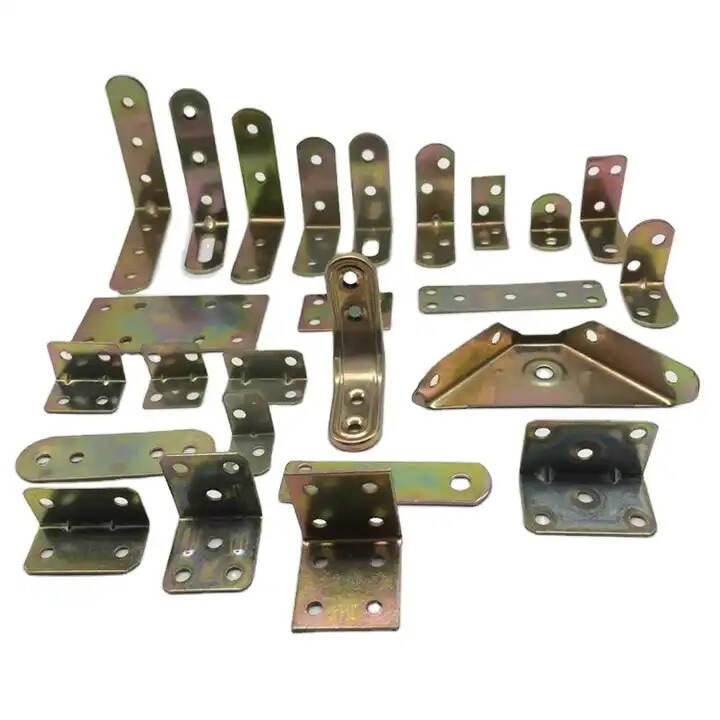
Understanding the Precision Capabilities of Modern Stamping Technology
Advances in Progressive Die Design
The evolution of progressive die technology has significantly enhanced the precision capabilities of custom stamping parts. Modern progressive dies incorporate advanced materials, computer-aided design, and precision machining techniques that enable manufacturers to achieve tolerances previously only possible through traditional machining processes. These sophisticated tooling systems can maintain dimensional accuracy within ±0.001 inches across multiple forming operations, making them viable alternatives to machined components in many applications. The integration of servo-driven presses with advanced control systems further enhances the repeatability and consistency of stamped parts, ensuring that tight tolerances are maintained throughout high-volume production runs.
Progressive die stamping allows for multiple operations to be performed simultaneously, including blanking, punching, bending, and forming. This multi-stage approach enables custom stamping parts to achieve complex geometries while maintaining precise dimensional control. The use of hardened tool steels and specialized coatings extends die life and maintains consistent part quality over extended production runs. Advanced die design software enables engineers to simulate the stamping process, predicting potential issues and optimizing the design for maximum precision before physical tooling is manufactured.
Material Selection and Its Impact on Tolerance Achievement
The choice of material plays a crucial role in determining whether custom stamping parts can achieve the tight tolerances required to replace machined components. High-strength steels, precision alloys, and specialized materials with consistent grain structures provide the stability necessary for maintaining dimensional accuracy throughout the stamping process. Material thickness tolerances, surface finish requirements, and mechanical properties must be carefully considered when evaluating the feasibility of replacing machined parts with stamped alternatives. Advanced material characterization and quality control processes ensure that incoming raw materials meet the stringent requirements necessary for precision stamping operations.
Heat treatment and post-stamping operations can further enhance the dimensional stability and mechanical properties of custom stamping parts. Stress relieving, annealing, and specialized surface treatments help maintain the tight tolerances achieved during the initial forming process. The selection of appropriate materials with minimal springback characteristics ensures that formed parts retain their intended dimensions throughout subsequent manufacturing processes and end-use applications. Understanding the relationship between material properties and forming behavior is essential for successfully transitioning from machined to stamped components.
Cost Analysis and Economic Advantages
Tooling Investment Considerations
While the initial investment in precision stamping tooling can be substantial, the long-term cost benefits of custom stamping parts often outweigh the upfront expenses, particularly for medium to high-volume production requirements. The development of precision dies and fixtures requires significant engineering resources and specialized manufacturing capabilities, but these costs are amortized across the entire production run. Compared to the recurring costs associated with machined components, including machine time, tooling wear, and material waste, stamped parts typically offer superior cost-per-piece economics for volumes exceeding several thousand pieces annually.
The durability and longevity of modern stamping dies enable extended production runs without significant deterioration in part quality or dimensional accuracy. Advanced die materials and surface treatments can extend tool life to millions of cycles, further improving the economic viability of custom stamping parts as replacements for machined components. Regular maintenance and reconditioning programs ensure that tooling remains in optimal condition, preserving the tight tolerances required for critical applications throughout the tool's operational life.
Production Efficiency and Scalability
The production efficiency advantages of custom stamping parts become increasingly significant as production volumes increase. High-speed stamping presses can produce hundreds or thousands of parts per hour, dramatically reducing the time and labor costs associated with manufacturing compared to traditional machining operations. This efficiency advantage translates directly into lower per-piece costs and improved delivery schedules for customers requiring large quantities of precision components. The ability to integrate multiple forming operations into a single progressive die setup eliminates secondary operations and reduces overall production time.
Scalability considerations favor custom stamping parts when production requirements may fluctuate or grow over time. Once tooling is developed and proven, production capacity can be readily increased by adding additional press time or utilizing multiple production lines. This flexibility provides manufacturers with the ability to respond quickly to changing market demands while maintaining consistent quality and cost structures. The predictable nature of stamping operations also facilitates accurate production planning and inventory management, contributing to overall operational efficiency.
Quality Control and Precision Measurement
Advanced Inspection and Measurement Techniques
Achieving and maintaining tight tolerances in custom stamping parts requires sophisticated quality control systems and measurement techniques. Coordinate measuring machines, optical comparators, and laser scanning systems provide the precision measurement capabilities necessary to verify dimensional accuracy throughout the production process. Statistical process control methods enable real-time monitoring of critical dimensions, allowing for immediate adjustments when variations are detected. These advanced quality control systems ensure that stamped parts consistently meet the demanding specifications previously associated only with machined components.
In-line inspection systems integrated directly into stamping press operations provide continuous monitoring of part quality without interrupting production flow. Vision systems, laser micrometers, and automated gauging equipment can detect dimensional variations in real-time, triggering corrective actions before defective parts are produced. This proactive approach to quality control significantly reduces scrap rates and ensures that custom stamping parts maintain the tight tolerances required for critical applications. Documentation and traceability systems provide complete records of dimensional compliance for quality assurance and regulatory requirements.
Process Validation and Capability Studies
Process validation studies demonstrate the capability of stamping operations to consistently produce custom stamping parts within specified tolerance limits. Capability studies involve statistical analysis of dimensional measurements from representative production samples, providing quantitative evidence of process stability and precision. These studies are essential for demonstrating that stamped parts can reliably replace machined components in critical applications where dimensional accuracy is paramount. Process capability indices such as Cpk values provide objective measures of manufacturing performance and help identify opportunities for continuous improvement.
Long-term capability monitoring ensures that custom stamping parts continue to meet tight tolerance requirements throughout extended production runs. Regular assessment of tooling condition, material consistency, and process parameters helps maintain optimal performance and prevents gradual deterioration in dimensional accuracy. Predictive maintenance programs based on statistical analysis of quality data enable proactive tooling maintenance and replacement, ensuring consistent part quality over the entire production lifecycle.
Application-Specific Considerations
Automotive Industry Requirements
The automotive industry represents one of the largest markets for precision custom stamping parts, with stringent requirements for dimensional accuracy, surface finish, and mechanical properties. Safety-critical components such as brake system parts, structural elements, and engine components require tight tolerances that were traditionally achieved through machining processes. Modern stamping technology has enabled the production of automotive custom stamping parts that meet these demanding specifications while providing significant cost advantages over machined alternatives. Advanced high-strength steels and specialized forming techniques allow stamped parts to achieve the strength and precision required for critical automotive applications.
Regulatory compliance and certification requirements in the automotive industry necessitate comprehensive documentation of material properties, dimensional accuracy, and manufacturing processes. Custom stamping parts must demonstrate consistent performance under various operating conditions, including temperature extremes, vibration, and mechanical stress. Extensive testing protocols and validation procedures ensure that stamped components provide equivalent or superior performance compared to machined parts while meeting all applicable industry standards and regulations.
Electronics and Telecommunications Applications
The electronics industry demands exceptionally tight tolerances for custom stamping parts used in connectors, shielding components, and precision assemblies. Miniaturization trends in electronic devices require stamped parts with dimensions measured in thousandths of inches while maintaining excellent surface finish and electrical properties. Specialized materials such as beryllium copper, phosphor bronze, and precious metal alloys are commonly used in electronic custom stamping parts, requiring precise control of forming parameters to achieve the required specifications. Clean room manufacturing environments and specialized handling procedures ensure that stamped electronic components meet the cleanliness and quality standards required for sensitive applications.
High-frequency applications in telecommunications equipment impose additional requirements on custom stamping parts, including controlled impedance, minimal signal loss, and electromagnetic compatibility. Precision stamping processes must maintain consistent electrical properties while achieving tight dimensional tolerances, often requiring specialized testing and validation procedures. The rapid pace of technological advancement in the electronics industry creates opportunities for innovative stamping solutions that can provide cost-effective alternatives to traditional machining approaches.
Design Optimization for Stamping Processes
Design for Manufacturing Principles
Successful implementation of custom stamping parts as replacements for machined components requires careful consideration of design for manufacturing principles. Part geometry, material flow, and forming sequences must be optimized to achieve the required tolerances while minimizing manufacturing complexity and cost. Design modifications that accommodate the inherent characteristics of stamping processes can often maintain or improve part functionality while enabling significant cost reductions compared to machined alternatives. Collaboration between design engineers and stamping specialists is essential for identifying optimization opportunities and ensuring successful implementation.
Feature modifications such as bend radii, hole locations, and edge treatments can significantly impact the achievable tolerances in custom stamping parts. Understanding the limitations and capabilities of stamping processes enables designers to make informed decisions about which features can be successfully formed and which may require secondary operations. Advanced simulation software allows engineers to evaluate different design approaches and predict the dimensional accuracy achievable through various stamping sequences, facilitating optimization of part designs for maximum precision and cost-effectiveness.
Tolerance Stack-up Analysis
Comprehensive tolerance analysis is crucial for determining whether custom stamping parts can successfully replace machined components in assembly applications. The cumulative effect of individual part tolerances on assembly fit and function must be carefully evaluated to ensure that stamped parts provide equivalent performance to their machined counterparts. Advanced tolerance analysis software enables engineers to model complex assemblies and predict the impact of manufacturing variations on overall system performance. This analytical approach provides confidence that custom stamping parts will meet the functional requirements of demanding applications.
Statistical tolerance analysis methods account for the natural variation inherent in manufacturing processes, providing more realistic predictions of assembly performance compared to worst-case analyses. Monte Carlo simulation techniques can model the interaction of multiple tolerance dimensions and predict the probability of assembly success under various manufacturing scenarios. These sophisticated analysis tools enable engineers to optimize tolerance allocations and identify critical dimensions that require the tightest control in custom stamping parts.
Future Trends and Technology Development
Advanced Materials and Forming Techniques
Ongoing developments in materials science and forming technology continue to expand the capabilities of custom stamping parts in achieving tight tolerances comparable to machined components. Advanced high-strength steels, aluminum alloys, and exotic materials with superior formability characteristics enable the production of stamped parts with enhanced dimensional stability and mechanical properties. Innovative forming techniques such as hydroforming, electromagnetic forming, and incremental forming provide new opportunities for creating complex geometries with precision previously unattainable through conventional stamping processes.
Additive manufacturing technology is beginning to influence stamping tool design and production, enabling the creation of complex cooling channels, conformal surfaces, and optimized material distribution in stamping dies. These advanced tooling technologies can improve dimensional control and extend tool life, further enhancing the economic advantages of custom stamping parts over machined alternatives. Research into smart materials and adaptive tooling systems promises to provide even greater precision and flexibility in future stamping operations.
Industry 4.0 and Digital Manufacturing Integration
The integration of Industry 4.0 technologies into stamping operations is revolutionizing the production of precision custom stamping parts. Real-time data collection, artificial intelligence, and machine learning algorithms enable predictive quality control and automatic process optimization to maintain tight tolerances throughout production runs. Digital twin technology allows for virtual monitoring and optimization of stamping processes, providing unprecedented insight into the factors affecting dimensional accuracy and part quality. These advanced manufacturing technologies are positioning custom stamping parts as increasingly viable replacements for machined components across a broader range of applications.
Connected manufacturing systems enable seamless integration of stamping operations with upstream and downstream processes, facilitating improved quality control and traceability. Automated material handling, robotic part manipulation, and integrated inspection systems reduce human error and improve consistency in custom stamping parts production. The implementation of blockchain technology for supply chain tracking and quality documentation provides enhanced transparency and accountability in precision manufacturing operations.
FAQ
What tolerance levels can modern custom stamping parts achieve compared to machined components?
Modern custom stamping parts can achieve tolerances as tight as ±0.001 inches (±0.025 mm) in many applications, which approaches the precision levels traditionally associated with machined components. The exact tolerance achievable depends on factors such as material thickness, part geometry, and the specific stamping process used. Progressive die stamping with advanced tooling and process control can consistently maintain these tight tolerances across high-volume production runs, making stamped parts viable alternatives to machined components in many precision applications.
How do the initial costs of stamping tooling compare to the long-term savings versus machining?
While stamping tooling requires a higher initial investment compared to machining setups, the cost per piece becomes significantly lower for medium to high-volume production. The break-even point typically occurs between 5,000 to 50,000 pieces, depending on part complexity and tolerance requirements. For volumes exceeding this threshold, custom stamping parts can provide 30-70% cost savings compared to machined components over the product lifecycle, including reduced material waste, faster production rates, and lower labor costs.
What industries benefit most from replacing machined parts with precision stamped components?
Industries with high-volume production requirements and moderate to tight tolerance specifications benefit most from transitioning to custom stamping parts. The automotive industry leads in adoption, particularly for structural components, brackets, and safety-critical parts. Electronics and telecommunications industries utilize precision stamped connectors, shielding components, and heat sinks. Appliance manufacturers, aerospace suppliers, and medical device companies also successfully implement stamped alternatives for components that previously required machining, achieving significant cost reductions while maintaining quality standards.
What design considerations are most important when converting from machined to stamped parts?
Key design considerations include optimizing bend radii to prevent cracking, positioning holes away from bend lines to maintain dimensional accuracy, and ensuring adequate material flow during forming operations. Wall thickness should be uniform where possible, and draft angles may need to be incorporated for complex forms. Feature locations must account for material springback and forming limitations. Collaboration between design engineers and stamping specialists during the early design phase is crucial for identifying potential issues and optimizing part geometry for both functionality and manufacturability while maintaining the required tight tolerances.
Table of Contents
- Understanding the Precision Capabilities of Modern Stamping Technology
- Cost Analysis and Economic Advantages
- Quality Control and Precision Measurement
- Application-Specific Considerations
- Design Optimization for Stamping Processes
- Future Trends and Technology Development
-
FAQ
- What tolerance levels can modern custom stamping parts achieve compared to machined components?
- How do the initial costs of stamping tooling compare to the long-term savings versus machining?
- What industries benefit most from replacing machined parts with precision stamped components?
- What design considerations are most important when converting from machined to stamped parts?