
 EN
EN
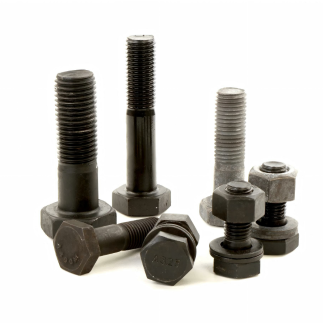
High-grade bolts serve as critical safety components in heavy machinery applications where failure is not an option. In industrial environments, the difference between a standard fastener and a high-grade bolt can determine whether equipment operates safely for years or experiences catastrophic failure. Grade 8 bolts in the SAE system and Class 10.9 bolts in the metric system represent the pinnacle of commercial bolt strength, offering tensile strengths that can withstand the extreme forces generated by heavy machinery during operation.
The safety implications of using high-grade bolt specifications in heavy machinery extend beyond simple mechanical strength. These precision-engineered fasteners undergo rigorous heat treatment processes that create a microstructure capable of resisting fatigue, vibration, and the cyclic loading conditions that characterize heavy equipment operation. When properly specified and installed, a high-grade bolt becomes an integral part of the machinery's safety system, ensuring that critical joints maintain their integrity under the most demanding operational conditions.
Superior Tensile Strength and Mechanical Properties
Understanding Grade 8 and Class 10.9 Strength Specifications
Grade 8 bolts achieve a minimum tensile strength of 150,000 psi, while Class 10.9 metric bolts deliver a minimum tensile strength of 1040 MPa, making them substantially stronger than lower-grade alternatives. This high-grade bolt specification ensures that fasteners can withstand the enormous forces generated by heavy machinery without experiencing yield or ultimate failure. The proof stress of these fasteners typically ranges between 120,000 to 130,000 psi for Grade 8 bolts, providing a significant safety margin above normal operating loads.
The heat treatment process that creates these strength characteristics involves careful temperature control during quenching and tempering operations. This metallurgical process transforms the internal grain structure of the high-grade bolt material, creating a balance between hardness and toughness that is essential for heavy machinery applications. The resulting mechanical properties include not only high tensile strength but also improved fatigue resistance and resistance to stress corrosion cracking.
Heavy machinery often subjects fasteners to combined loading conditions including tension, shear, and torsion simultaneously. A high-grade bolt specification accounts for these complex stress states by providing sufficient strength reserves in all loading directions. This multi-directional strength capability becomes particularly important in applications such as excavator boom connections, crane structural joints, and mining equipment frame assemblies where loads change direction and magnitude constantly.
Material Composition and Alloy Selection
The base material for a high-grade bolt typically consists of medium-carbon steel alloys containing chromium, molybdenum, and sometimes nickel additions. These alloying elements contribute to hardenability, allowing the bolt to achieve uniform strength properties throughout its cross-section. The careful selection of alloy composition ensures that the high-grade bolt maintains consistent mechanical properties even in larger diameters where cooling rates during heat treatment are slower.
Quality control during manufacturing involves strict chemical composition verification and mechanical testing protocols. Each lot of high-grade bolt production undergoes tensile testing, hardness verification, and dimensional inspection to ensure compliance with ASTM A354, SAE J429, or ISO 4762 specifications. This rigorous quality assurance process guarantees that every high-grade bolt delivered to heavy machinery applications meets the stringent performance requirements necessary for safe operation.
The surface finish and coating options for high-grade bolt applications in heavy machinery often include zinc plating, phosphate coating, or specialized corrosion-resistant treatments. These protective finishes help maintain the structural integrity of the fastener by preventing environmental degradation that could compromise the bolt's load-carrying capacity over time. Proper surface treatment selection becomes particularly important in outdoor heavy machinery applications where exposure to moisture, chemicals, and temperature extremes is common.
Fatigue Resistance in Dynamic Loading Conditions
Cyclic Loading Performance in Heavy Equipment
Heavy machinery generates repetitive loading cycles that can cause fatigue failure in inadequately specified fasteners. A high-grade bolt designed for these applications incorporates microstructural features that resist crack initiation and propagation under cyclic loading conditions. The fatigue strength of Grade 8 and Class 10.9 bolts typically exceeds 65,000 psi for 2 million cycles, providing substantial endurance capability for equipment that operates continuously.
The stress concentration factors around bolt threads become critical in fatigue applications. High-grade bolt manufacturing processes include controlled thread rolling operations that create compressive residual stresses in the thread roots, effectively reducing stress concentrations that could initiate fatigue cracks. This manufacturing technique significantly improves the fatigue life of the high-grade bolt compared to cut-thread alternatives, making it especially suitable for critical heavy machinery connections.
Vibration-induced loosening represents another failure mode that high-grade bolt specifications address through precise thread geometry and surface finish control. The combination of high clamping force capability and controlled thread tolerances helps maintain joint integrity even under the severe vibration conditions common in heavy machinery operation. Proper preload application becomes essential to realize these fatigue resistance benefits in actual service conditions.
Stress Concentration Mitigation Techniques
The transition radius between the bolt head and shank area receives special attention in high-grade bolt design to minimize stress concentrations. Manufacturing specifications typically require controlled fillet radii and surface finish standards that reduce the likelihood of crack initiation in these high-stress regions. These design features become particularly important in heavy machinery applications where shock loading and dynamic forces are prevalent.
Thread engagement length calculations for high-grade bolt applications consider both static strength requirements and fatigue performance criteria. Optimal thread engagement typically ranges between 1.5 to 2.5 times the bolt diameter, depending on the material properties of the mating component. This engagement length ensures that thread stresses remain within acceptable limits while providing adequate fatigue life for the expected service duration.
Surface treatment selection for high-grade bolt applications must balance corrosion protection with fatigue performance considerations. Some coating processes can introduce hydrogen embrittlement or reduce fatigue strength if not properly controlled. Specification of appropriate surface treatments ensures that the high-grade bolt maintains its full strength capability while providing necessary environmental protection for heavy machinery applications.
Joint Integrity and Clamping Force Optimization
Preload Requirements for Heavy Machinery Applications
Proper preload application is essential to realize the full safety potential of a high-grade bolt in heavy machinery connections. The preload force should typically range between 70% to 85% of the bolt's proof load to ensure adequate clamping force while maintaining a safety margin against overload. This preload level helps prevent joint separation under dynamic loading conditions and distributes applied loads more evenly across the connection interface.
Torque specifications for high-grade bolt installation require careful consideration of thread lubrication, surface conditions, and installation method. The relationship between applied torque and achieved preload can vary significantly based on friction factors in the threads and under the bolt head. Specification of appropriate installation procedures, including lubrication requirements and torque values, ensures consistent preload achievement across multiple installations.
Load distribution patterns in bolted joints depend heavily on the clamping force provided by the high-grade bolt. Adequate preload creates a load path that transfers applied forces through friction in the joint interface rather than through the bolt itself. This load transfer mechanism significantly improves the fatigue life of the connection and reduces the likelihood of bolt failure under operational loading conditions.
Joint Design Considerations for Maximum Safety
The bearing area under the bolt head and nut must be sufficient to prevent crushing of the clamped materials under high preload conditions. High-grade bolt applications often require hardened washers or bearing plates to distribute the clamping force over an adequate area. This bearing stress control becomes particularly important when connecting materials with lower compressive strength than the high-grade bolt itself.
Hole tolerance specifications for high-grade bolt installations balance assembly ease with joint performance requirements. Excessive clearance between the bolt and hole can allow joint movement that reduces fatigue life, while insufficient clearance can create installation difficulties and stress concentrations. Typical hole tolerances for high-grade bolt applications range from +0.0625 inches for precision installations to +0.125 inches for standard applications.
Multiple bolt patterns in heavy machinery connections require careful consideration of load sharing and installation sequence. The elastic properties of the high-grade bolt and connected components determine how loads distribute among multiple fasteners. Proper joint design ensures that each high-grade bolt in a pattern carries its intended share of the applied load, preventing overload of individual fasteners that could compromise overall connection safety.
Quality Assurance and Testing Protocols
Manufacturing Standards and Certification Requirements
High-grade bolt production for heavy machinery applications must comply with stringent manufacturing standards that ensure consistent quality and performance. ASTM A354 Grade BD bolts and ISO 4762 Class 10.9 socket head cap screws represent common specifications that define chemical composition, mechanical properties, and dimensional requirements. These standards include mandatory testing protocols that verify tensile strength, yield strength, and elongation properties for each production lot.
Traceability requirements for high-grade bolt applications typically include heat lot identification marking that allows verification of material properties and manufacturing history. This traceability becomes essential for critical heavy machinery applications where bolt failure could result in significant safety consequences or economic losses. Documentation packages often include material test reports, dimensional inspection certificates, and coating thickness verification data.
Third-party testing and certification services provide independent verification of high-grade bolt properties for critical applications. These services typically include mechanical testing, chemical analysis, and dimensional verification performed by accredited laboratories. Independent certification helps ensure that the high-grade bolt meets all specified requirements and provides confidence in the fastener's performance capability for heavy machinery applications.
Installation Inspection and Torque Verification
Field inspection procedures for high-grade bolt installations should include verification of proper torque application, surface condition assessment, and dimensional checks. Torque verification using calibrated equipment helps ensure that specified preload levels are achieved during installation. Regular inspection of installed fasteners can identify loosening, corrosion, or other conditions that might compromise the safety performance of the high-grade bolt over time.
Non-destructive testing methods such as ultrasonic examination or magnetic particle inspection may be specified for critical high-grade bolt applications in heavy machinery. These inspection techniques can detect internal flaws, surface cracks, or other defects that might not be visible during routine inspection. Early detection of bolt degradation allows for preventive replacement before failure occurs.
Documentation of installation procedures and inspection results provides valuable data for maintenance planning and reliability analysis. Detailed records of high-grade bolt performance in specific heavy machinery applications help optimize replacement intervals and identify potential design improvements. This performance data becomes particularly valuable for equipment operating in severe service conditions where fastener reliability is critical.
FAQ
What makes Grade 8 and Class 10.9 bolts safer than standard grades in heavy machinery?
Grade 8 and Class 10.9 high-grade bolts provide significantly higher tensile strength, improved fatigue resistance, and better performance under dynamic loading conditions compared to standard grades. These bolts undergo specialized heat treatment processes that create a microstructure capable of withstanding the extreme forces and cyclic loading typical in heavy machinery applications, reducing the risk of catastrophic failure.
How do I determine the correct preload for high-grade bolts in my heavy equipment?
Proper preload for a high-grade bolt should typically range between 70% to 85% of the bolt's proof load, which varies based on the specific grade and size. Calculate the required torque based on thread pitch, lubrication conditions, and friction factors. Always consult manufacturer specifications and consider using torque-tension relationships specific to your high-grade bolt specification and installation conditions.
Can high-grade bolts prevent equipment failure in extreme operating conditions?
While high-grade bolts significantly improve safety margins and reduce failure probability, they must be properly specified, installed, and maintained to prevent equipment failure. The high-grade bolt alone cannot compensate for inadequate joint design, improper installation procedures, or lack of maintenance. However, when used correctly, these fasteners provide superior performance and reliability in extreme heavy machinery applications.
What inspection procedures should I follow for high-grade bolts in critical machinery connections?
Regular inspection should include torque verification, visual examination for corrosion or damage, and checking for bolt loosening. For critical applications, consider non-destructive testing methods such as ultrasonic or magnetic particle inspection to detect internal flaws. Document inspection results and establish replacement intervals based on service conditions and manufacturer recommendations for your specific high-grade bolt application.
Table of Contents
- Superior Tensile Strength and Mechanical Properties
- Fatigue Resistance in Dynamic Loading Conditions
- Joint Integrity and Clamping Force Optimization
- Quality Assurance and Testing Protocols
-
FAQ
- What makes Grade 8 and Class 10.9 bolts safer than standard grades in heavy machinery?
- How do I determine the correct preload for high-grade bolts in my heavy equipment?
- Can high-grade bolts prevent equipment failure in extreme operating conditions?
- What inspection procedures should I follow for high-grade bolts in critical machinery connections?